
Medication Basics
Online NDIS Medication Training for Disability Support Workers
- Disability Support
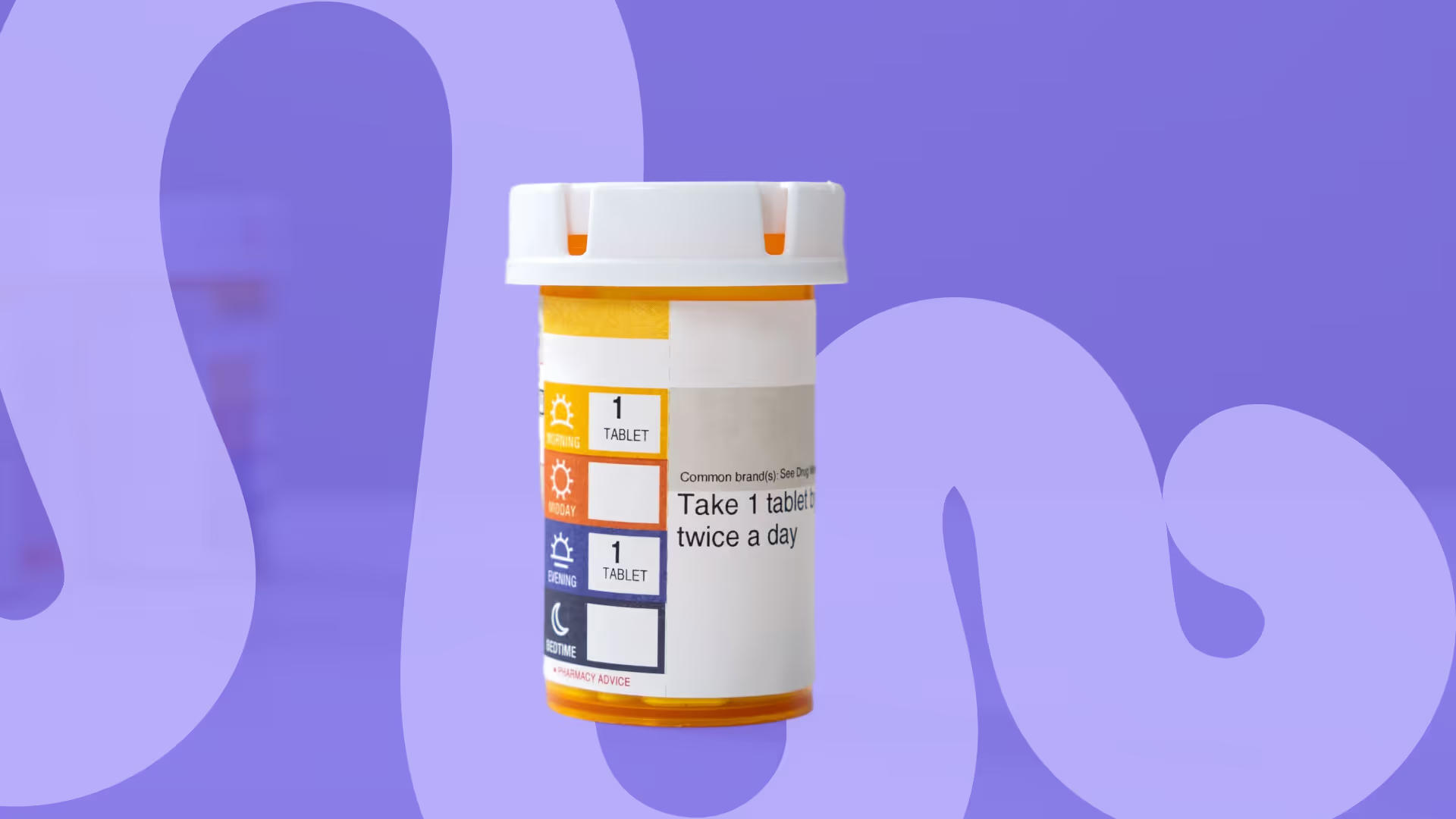
Course overview
This course is for support workers who supervise or physically assist a person to take their own medication. It does not cover administering medication.
Supporting a person with their medication is one of the more sensitive parts of a disability support worker’s role. It calls for clear knowledge, good judgement, and strict respect for the person’s rights. Medication Basics builds that capability across three modules.
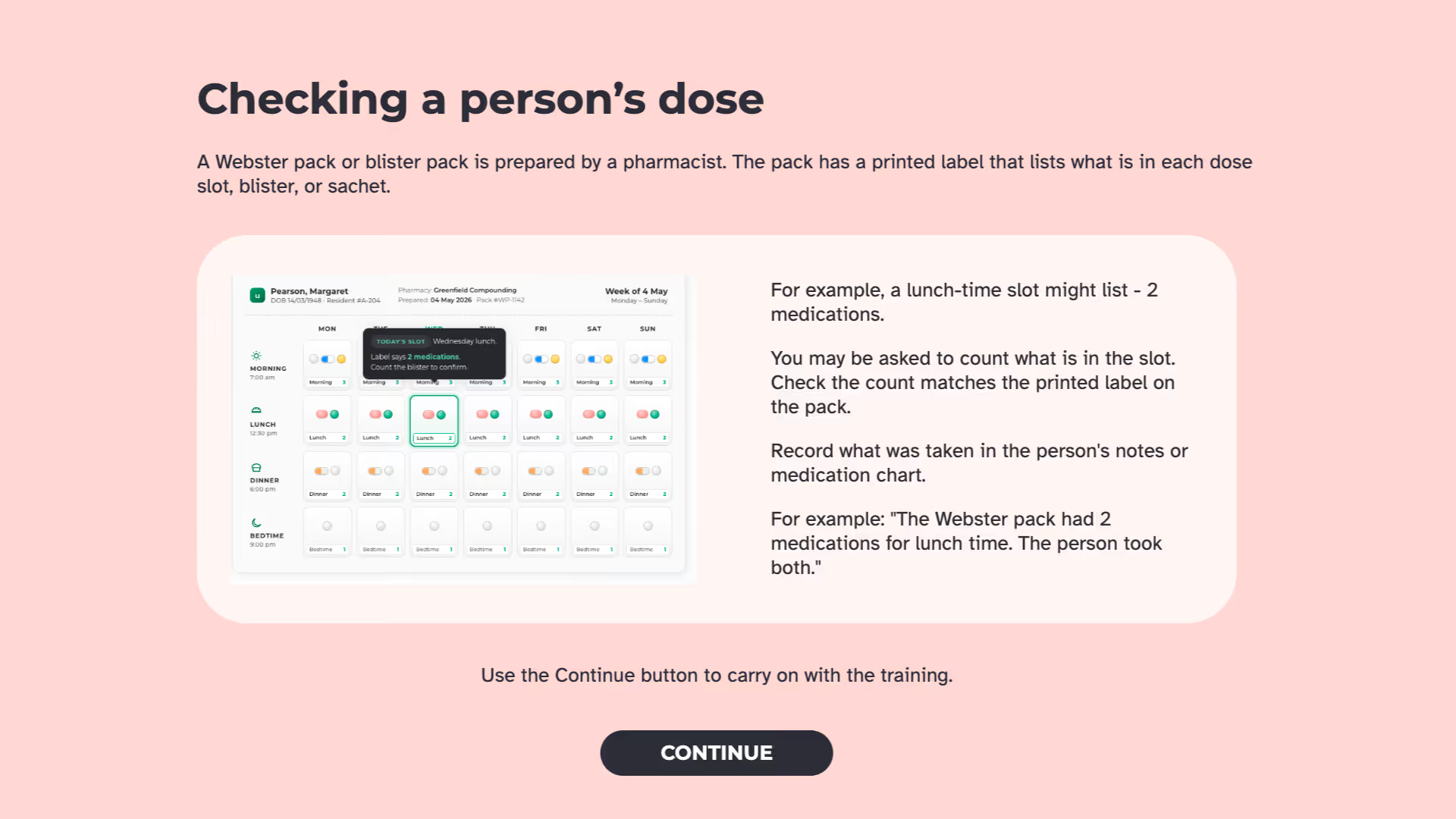
Learners start with what medication actually is, including common types, polypharmacy, side effects, and how to read a dose. They then move into the support worker role itself: responsibilities, privacy, consent, the right to refuse, the Rights of Medication, and how to recognise and respond to risks while assisting.
The final module covers medication incidents, adverse reactions, reportable incidents to the NDIS Commission, and how to keep clear and accurate records.
This course provides theoretical knowledge only. It does not assess comprehension or practical application. Verifying competency and authorising workers remains the provider’s responsibility.
What you'll learn
By the end of this medication basics course you will be able to
- identify common medication types, side effects and polypharmacy risks
- read doses correctly
- apply the Rights of Medication while respecting privacy, consent and refusal
- respond safely to medication risks, incidents and adverse reactions
- identify incidents that must be reported to the NDIS Commission
- keep accurate medication records.
Top Courses
in this Library
More information below.

Course structure
The course runs across three modules.
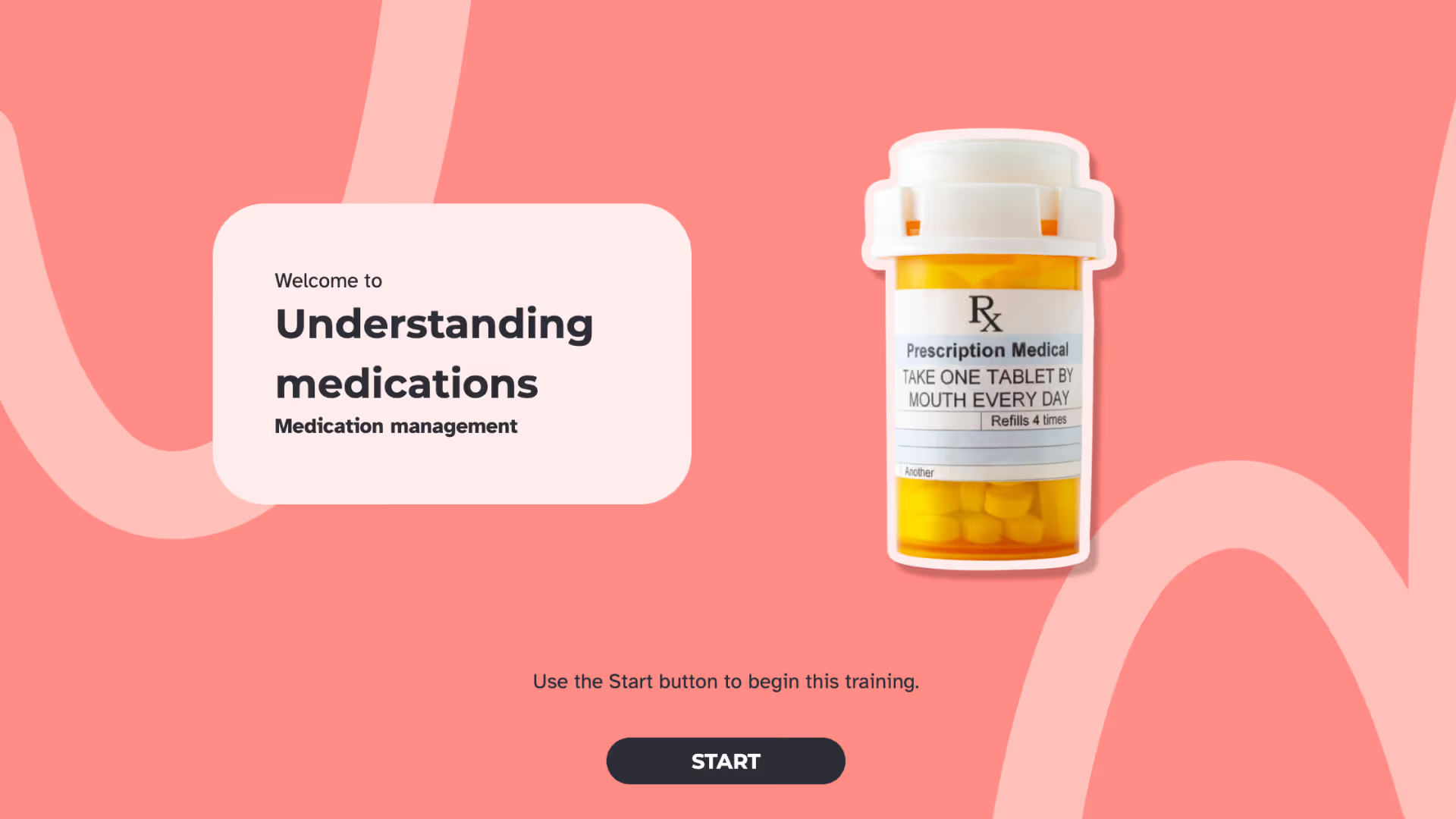
Module 1: Understanding Medications: What medication actually is, common types, polypharmacy, side effects, and how to read a dose.
Module 2: Medications and Your Role: The support worker's responsibilities, privacy, consent, the right to refuse, the Rights of Medication, and how to recognise and respond to risks while assisting.
Module 3: Medication Incidents and Record Keeping: Medication incidents, adverse reactions, reportable incidents to the NDIS Commission, and how to keep clear and accurate records.
More information about this course
- Medication types, dosing, and polypharmacy
- Support worker role, privacy, consent, and refusal
- The Rights of medication
- Responding to risks during medication support
- Medication incidents and record keeping
NDIS Practice Standards
Core Modules:
- 1. Rights and Responsibilities
- 4. Provision of Supports Environment
Quality Indicators:
- 1.1 Person-centred supports
- 1.4 Informed choice and independence
- 1.5 Violence, abuse, neglect, exploitation and discrimination
- 4.3 Management of medication
NDIS Workforce Capability Framework
Workforce Objectives:
- Our Relationship
- Be Present
Core Capabilities:
- 1.1 Uphold my rights
- 4.2 Manage health and safety
- Disability support workers
- NDIS service providers
- Supervisors and managers
- Carers and family carers
- New staff completing onboarding
- Existing staff needing a medication refresher
- Format: Online eLearning, self-paced
- Devices: Desktop, tablet, and mobile
- Assessment: Knowledge checks throughout
- Certificate: Medication Basics certificate of completion
How long is the medication basics course? Around 105 minutes across two modules, fully self-paced.
Do I get a certificate? Yes. A certificate of completion is issued at the end.
Is this course suitable for NDIS workers? Yes. It is built specifically for disability support workers, NDIS service providers, and carers, and aligns to the NDIS Practice Standards.
What are the Rights of Medication? The Rights of Medication are the safety checks workers apply before assisting a person with their medication. This course teaches each one and shows how to apply them on shift.
Does this course cover reportable incidents under the NDIS? Yes. Learners cover medication incidents, adverse reactions, and which incidents must be reported to the NDIS Commission.
Can I complete the course on my phone? Yes. The course works on desktop, tablet, and mobile.
Snapshot
Other courses that might interest you
















Start building your community with etrainu
