

Why is manual handling training critical in NDIS support?
Disability services provide residential care, supported living, community-based activities, day programs, and employment support, helping people with disability be more independent at home and in the community. Often, these supports involve manual handling: any activity requiring force by a person to lift, lower, push, pull, carry, or otherwise move, hold, or restrain any animate or inanimate object.
Let's explore three reasons why effective training is crucial.
- Prevent workplace injuries
Injuries often result from lifting and moving people or heavy objects. Tasks that involve bending, twisting, or turning, such as repetitive duties like laundry or helping a person shower, can also increase the risk of injury, especially musculoskeletal disorders like sprains and strains to the back and shoulders.
Insights from the Australian Bureau of Statistics' 2021-22 Work-related Injuries Report highlight the impacts faced by support workers who consistently perform manual handling tasks. Across the nation, community and personal service workers had the highest prevalence of manual handling-related injuries at 7%. The most common causes of work-related injuries were lifting, pushing, pulling or bending, accounting for 24% of all injuries.
Properly trained support workers are significantly less likely to experience these injuries, protecting their health and ability to provide consistent care.
- Protect participant safety and dignity
When manual handling techniques are performed incorrectly, participants face increased risks, including:
- Physical discomfort or pain during transfers
- Potential falls or accidents
- Loss of dignity due to awkward or unprofessional handling
It's also important to take a person-centred, trauma-informed approach. Some participants may have past trauma, so quality manual handling training goes a long way in ensuring that participants receive respectful and dignified support.
- Meet compliance
Under the NDIS Practice Standards and the model Work Health and Safety Act 2011, all workers must have appropriate training and work safely when performing manual handling tasks.
All service providers have a duty of care to ensure training is provided, and support workers have a duty of care to ensure they work safely, protecting themselves and the people they support.
The etrainu advantage: disability support training
etrainu's Manual Handling training is split into five focused courses, each covering a different type of manual handling within NDIS Core Module 4: Provision of Supports Environment.
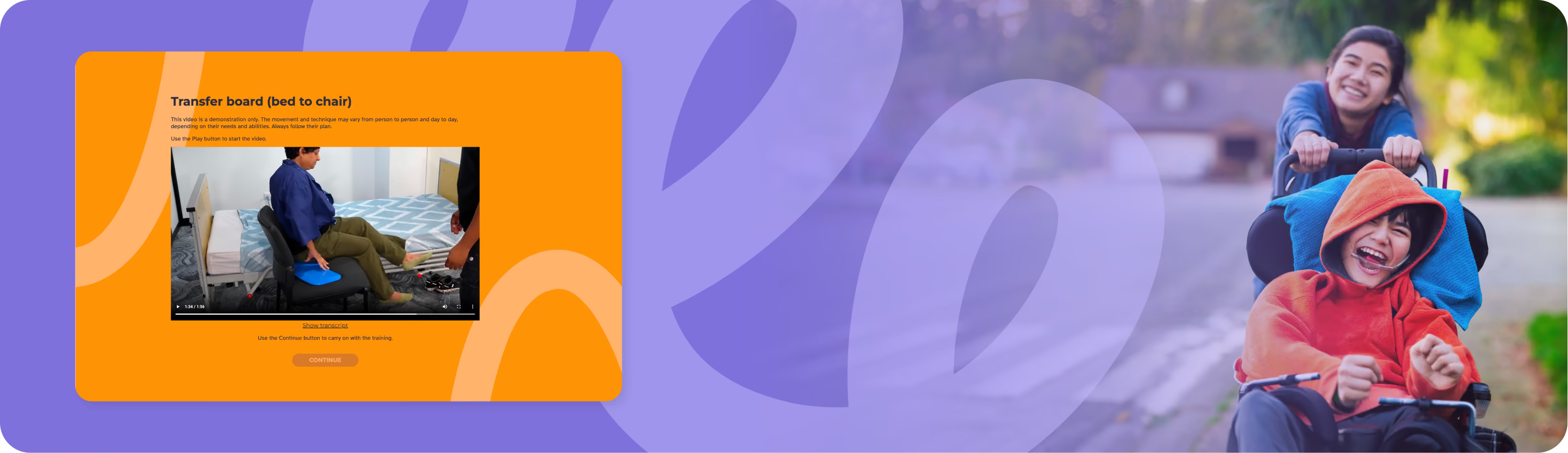
With practical video demonstrations, learners gain the skills and knowledge needed to safely and effectively support people with disability with transportation, equipment, mobility, and personal care—and confidently fulfil their roles in creating a safe working environment.
Created in collaboration with sector experts, this library offers a comprehensive NDIS training solution focused on safe manual handling techniques, from each module each learner will be able to:
- Spot hazards and apply the four-step risk management process to plan any manual handling task safely.
- Support bed mobility, sit-to-stand, and assisted movement, choosing the safest method for the person on the day.
- Fit and use transfer belts, boards, slings, and hoists safely, and know when to stop and review a transfer.
- Support showering, dressing, and toileting using safer body mechanics while maintaining privacy, dignity, and consent.
- Manage a wheelchair across kerbs, slopes, and doorways and support vehicle transfers safely using a Handibar.
.avif)
The course includes:
- 5 Core modules:
- Manual Handling: Aids and Equipment Support
- Manual Handling: Mobility Support
- Manual Handling: Personal Care Support
- Manual Handling: Safe Support Practices
- Manual Handling: Vehicle Transfer Support
- 7 Learning Bites
- Using a walk aid
- Repositioning up the bed
- Full-body hoist transfer
- Using a slide sheet
- Stand hoist transfer
- Managing a wheelchair
- Vehicle transfer
- Manual Handling Hub
- A central hub bringing together resources to support any manual handling activity or task.
As with the rest of our Disability Essentials Training Library, our Manual Handling training is mapped to the NDIS Practice Standards and has been recently refreshed to reflect current models and best practices.
Through this course, service providers can rest assured that their staff are getting the training they need, gaining the skills to work safely, thereby reducing injuries, meeting compliance requirements, and continuing to deliver high-quality care.
Our NDIS manual handling training is in our Disability Essentials Training Library.

.avif)