
Understanding Restrictive Practices
Online NDIS Training for Disability Support Workers
- Disability Support

Course overview
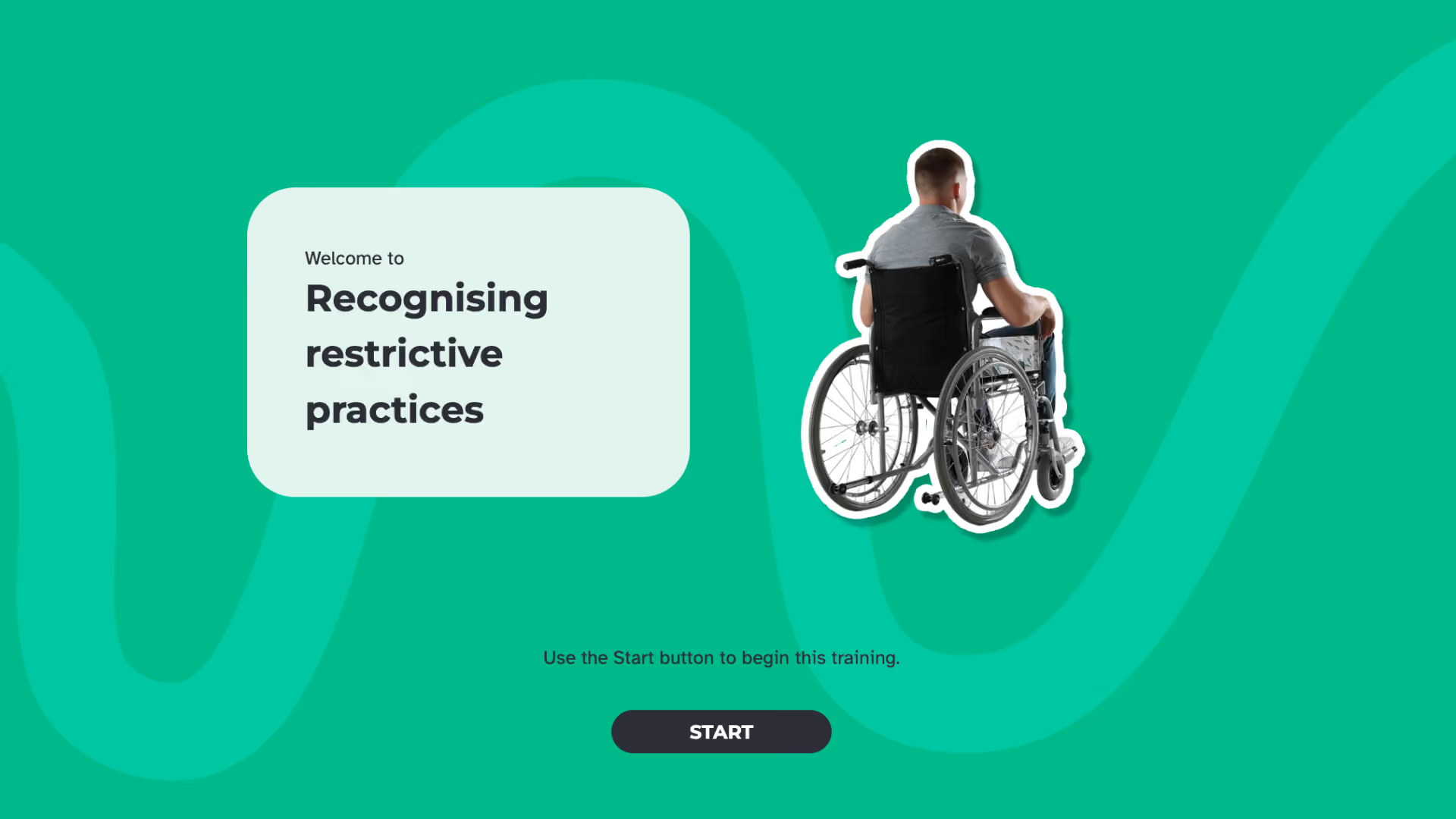
A restrictive practice is any action that limits a person's freedom of movement, choice, or rights. Disability support workers play a key role in recognising when one is being used, responding in the right way, and helping reduce its use over time.
The Understanding Restrictive Practices course builds these skills from the ground up across seven modules. Learners start by recognising the five regulated types under the NDIS and how to support someone through emotional dysregulation using co-regulation and de-escalation. They then work through each restraint type in depth: seclusion, physical, mechanical, chemical, and environmental.
Each module covers the risks, when use is lawful, prohibited techniques and devices, alternatives to try first, and what to document and report. Practice scenarios let learners apply what they have learned to real support situations.
What you'll learn
By the end of the Understanding Restrictive Practices course you will be able to:
- Recognise the five regulated types of restrictive practice under the NDIS
- Identify when each restraint type can and cannot lawfully be used
- Apply co-regulation, de-escalation, and less restrictive alternatives
- Recognise the signs of emotional dysregulation early
- Identify prohibited techniques and devices
- Assist with medication safely when authorised
- Meet your monitoring, documentation, and reporting responsibilities
- Reduce the use of restrictive practices over time
- Apply the role of the Positive Behaviour Support Plan in restrictive practice authorisation
Top Courses
in this Library
More information below.

Course structure
The Understanding Restrictive Practices course runs across seven modules.
Module 1: Recognising Restrictive Practices: The five regulated types under the NDIS, when use is lawful, what consent means, and what counts as misuse.
Module 2: Supporting Emotional Regulation: Co-regulation, de-escalation, and the four stress responses (fight, flight, freeze, fawn). How to support someone through dysregulation safely.
Module 3: Understanding Seclusion: What seclusion is, the less obvious forms it can take, when it may and must not be used, and alternatives to try first.
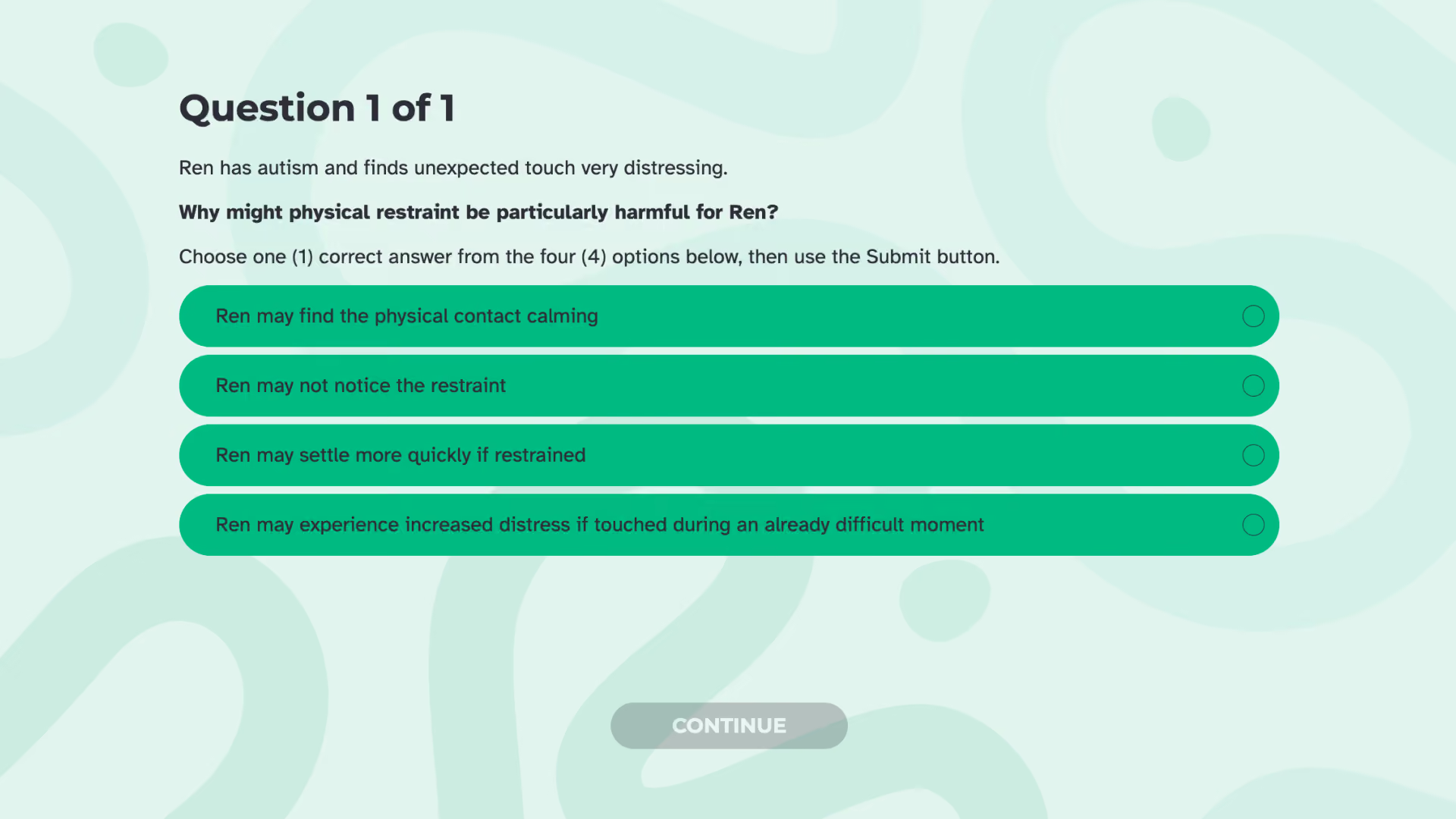
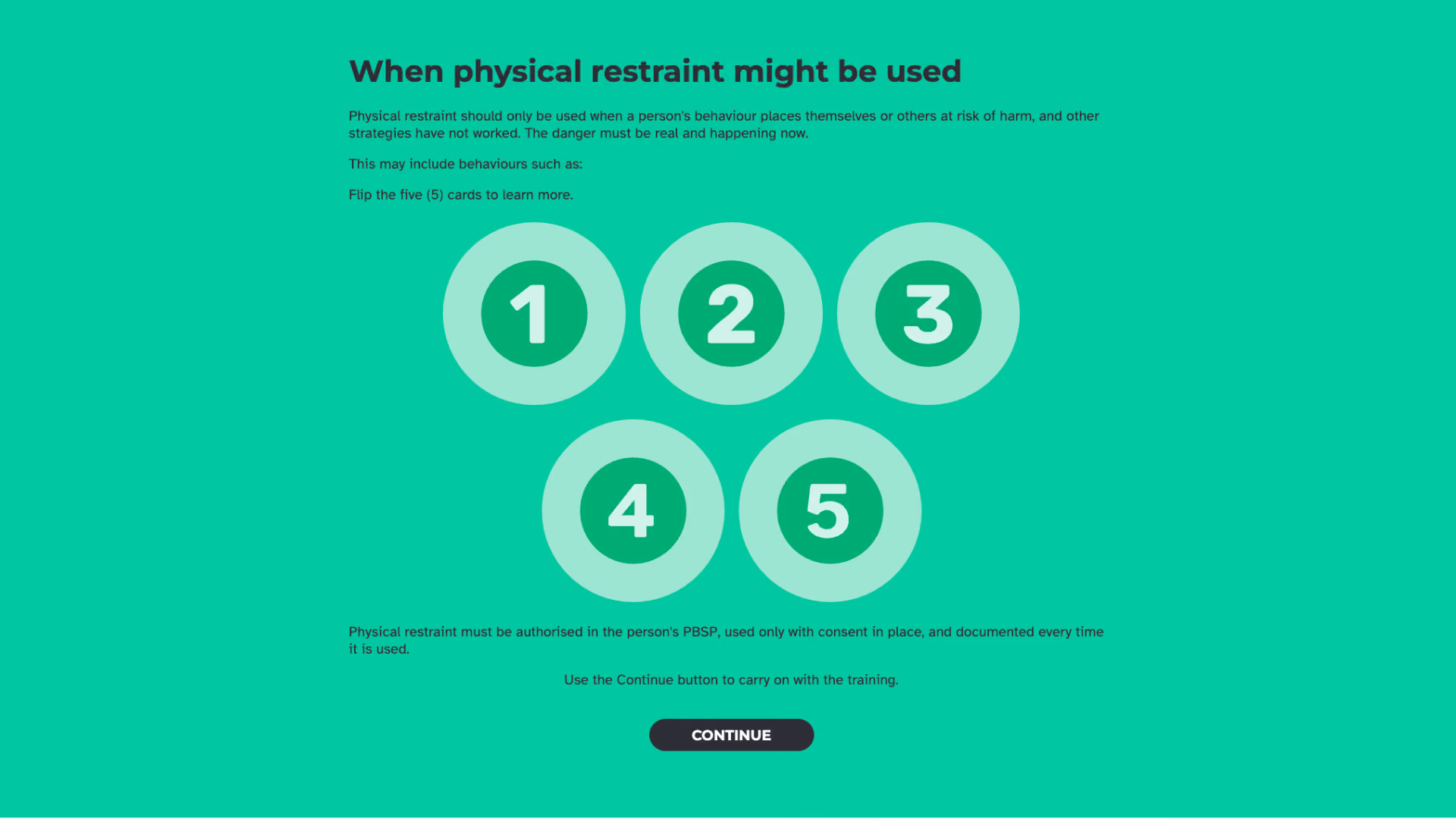
Module 4: Understanding Physical Restraint: The risks of physical restraint, prohibited techniques, the strict conditions for use, and the alternatives that should always be tried first.
Module 5: Understanding Mechanical Restraint: Devices like belts, harnesses, helmets, and splints. The risks, prohibited devices, and the difference between mechanical restraint and devices used for therapeutic reasons.
Module 6: Understanding Chemical Restraint: Medication used to influence behaviour rather than treat a health condition. The risks, the rules for safe medication assistance, and authorisation and consent.
Module 7: Understanding Environmental Restraint: Limiting access to parts of a person's environment, items, or activities. Including the less obvious forms it can take through technology, communication, or shared-home decisions.
More information about this course
- The five regulated restrictive practices under the NDIS
- Authorisation, consent, and Positive Behaviour Support Plans
- Emotional regulation, co-regulation, and de-escalation
- Seclusion: forms, risks, alternatives, and reporting
- Physical restraint: prohibited techniques and safe use conditions
- Mechanical restraint: devices, monitoring, and removal
- Chemical restraint: medication safety and PRN protocols
- Environmental restraint: forms, intent, effect, and skill building
- Prohibited techniques, devices, and unlawful use
- Documentation, reporting, and reducing restrictive practices over time
NDIS Practice Standards
Core Modules:
- 1. Rights and Responsibilities
- 3. Provision of Supports
- 4. Provision of Supports Environment
Quality Indicators:
- 1.1 Person-centred supports
- 1.3 Privacy and dignity
- 1.4 Independence and informed choice
- 1.5 Violence, abuse, neglect, exploitation and discrimination
- 3.3 Service agreements with participants
- 3.4 Responsive support provision
- 4.3 Management of medication
NDIS Workforce Capability Framework
Workforce Objective:
- Our Relationship
Core Capabilities:
- 1.1 Uphold my rights
- 2.2 Work within your capabilities
- Disability support workers
- Supervisors and managers
- NDIS service providers
- Workers supporting people with Positive Behaviour Support Plans
- New staff completing onboarding
- Existing staff needing a restrictive practices refresher
- Quality and compliance teams
- Format: Online eLearning, self-paced
- Duration: 4 hours 30 minutes (270 minutes, seven modules)
- Devices: Desktop, tablet, and mobile
- Assessment: Knowledge checks and practice scenarios throughout
- Certificate: Restrictive practices training certificate of completion
How long is the Understanding Restrictive Practices course? Around 4 hours 30 minutes across seven modules, fully self-paced. Modules can be completed in stages.
Do I get a restrictive practices certificate? Yes. A certificate of completion is issued at the end of the full seven-module course.
What are the five regulated restrictive practices under the NDIS? The five regulated restrictive practices are seclusion, physical restraint, mechanical restraint, chemical restraint, and environmental restraint. The Understanding Restrictive Practices course covers each one in its own dedicated module.
Does the course cover the Positive Behaviour Support Plan? Yes. The role of the Positive Behaviour Support Plan in authorising restrictive practices runs through every restraint module, with practice scenarios showing how to check it before acting.
Does the course cover unauthorised use and what to report? Yes. Every restraint module covers what to document and what to report, including how to identify and respond to unauthorised use.
Is this course suitable for NDIS workers? Yes. It is built specifically for disability support workers and aligns to the NDIS Practice Standards. It is also useful for supervisors, managers, and compliance teams.
Can I complete the Understanding Restrictive Practices course on my phone? Yes. The course works on desktop, tablet, and mobile.
Snapshot
Other courses that might interest you



.avif)

.avif)
.avif)

.avif)
.avif)


.avif)












.avif)
.avif)
.avif)
.avif)

.avif)
.avif)




Start building your community with etrainu
