
Positive Behaviour Support in Practice
Online NDIS Training for Disability Support Workers
- Disability Support

Course overview
Behaviour is communication. When a person's actions look challenging, they are often telling us about an unmet need, a sensory experience, or a quality of life issue we have missed. This online course gives disability support workers a practical grounding in Positive Behaviour Support under the NDIS.
The training runs across five modules covering behaviour as communication, quality of life, values and rights, communication methods, and sensory needs. Videos, scenarios, and quizzes help learners apply the skills to real support situations.
What you'll learn
- Recognise behaviour as communication
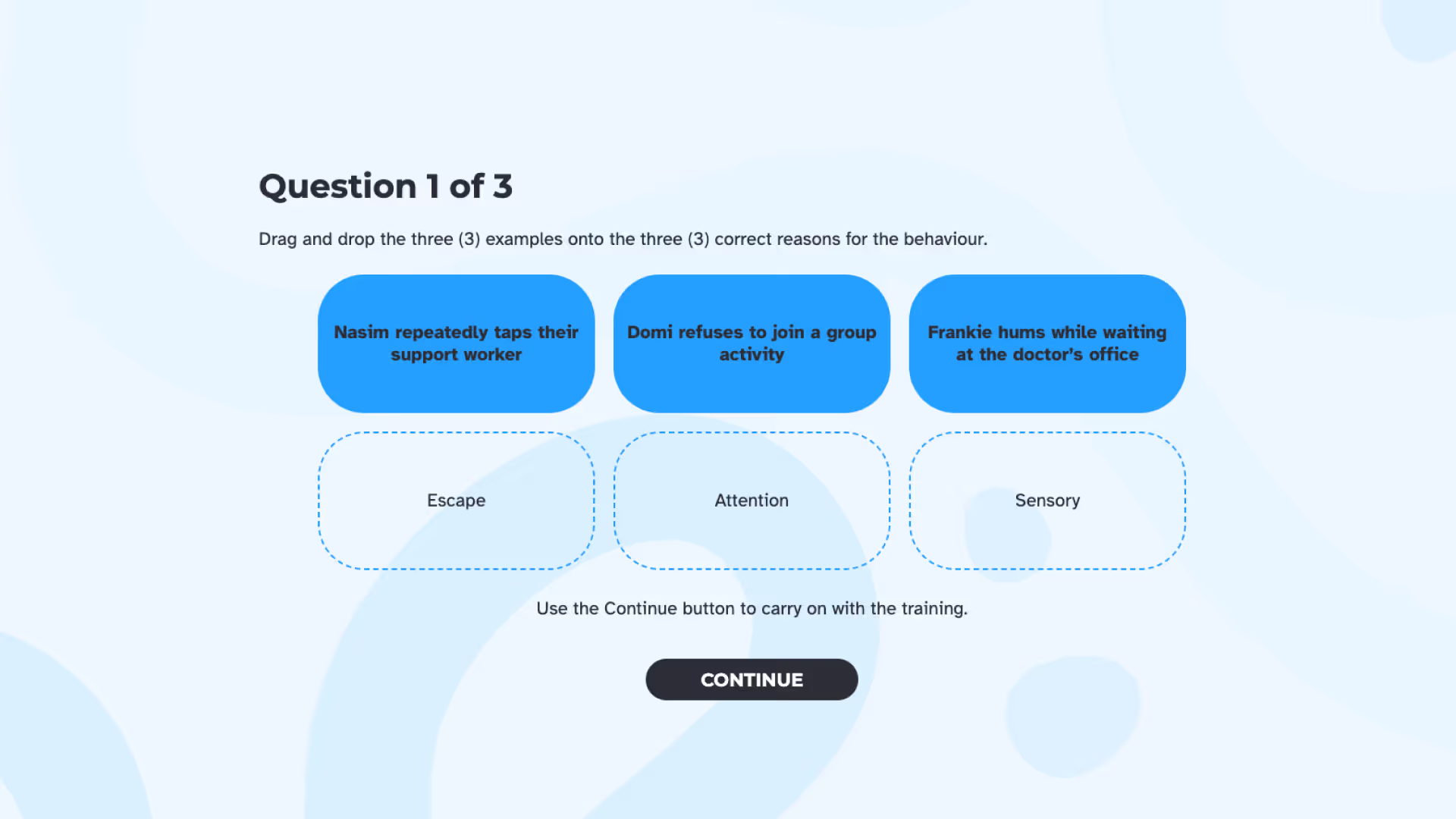
- Use the E.A.T.S. model to identify unmet needs
- Follow a Behaviour Support Plan in practice
- Support the eight domains of quality of life
- Apply NDIS Positive Behaviour Support values and principles
- Identify the five regulated restrictive practices
- Raise concerns about unauthorised use of restrictive practices
- Support a person using their preferred communication method, including AAC
- Use active listening and reflective practice on shift
- Recognise and respond to sensory needs and preferences
Top Courses
in this Library
More information below.

Course structure
The course runs across five modules.
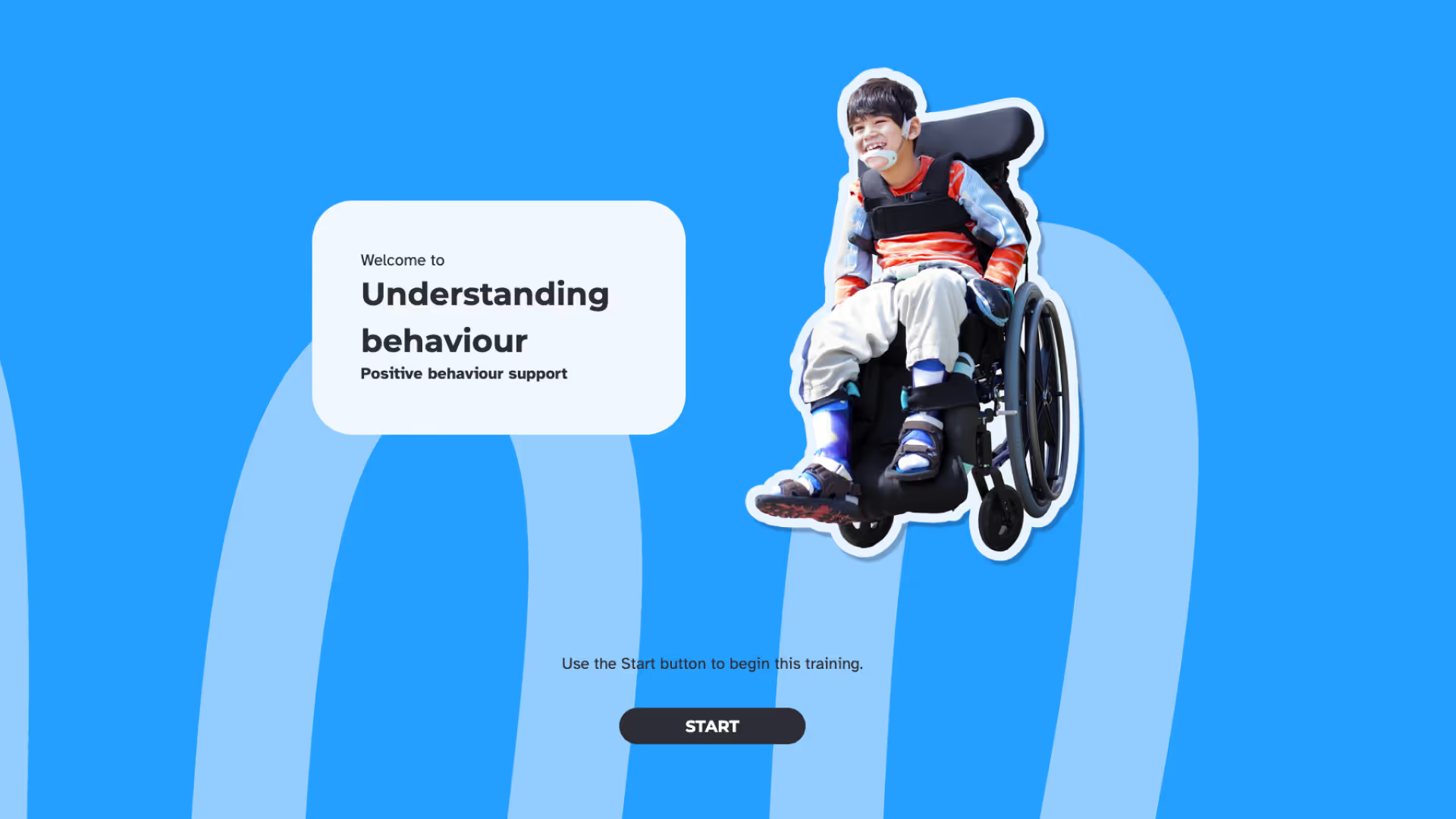
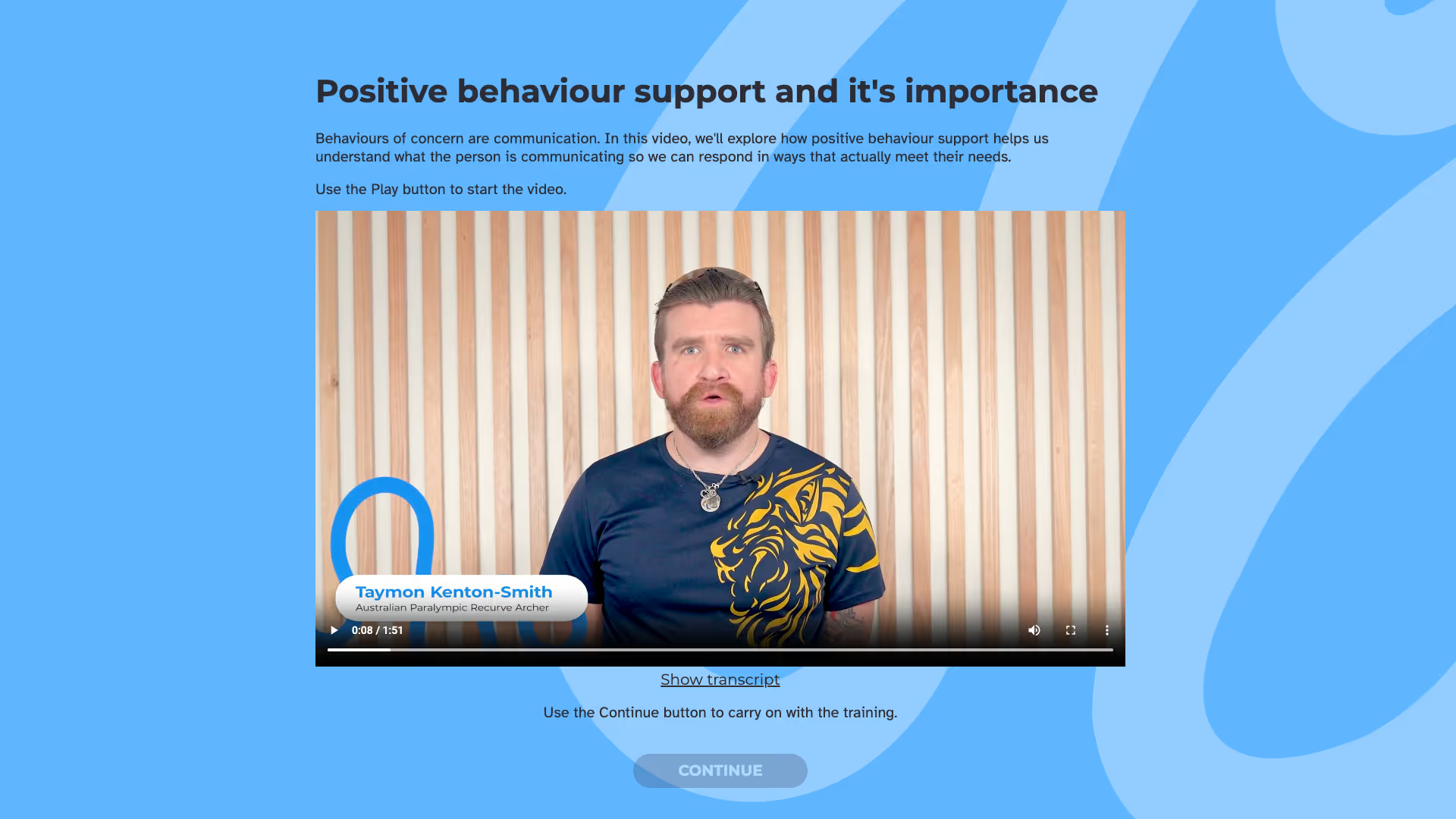
Understanding Behaviour: Behaviour as communication and the E.A.T.S. model for identifying unmet needs. The support worker's role in a Behaviour Support Plan.
Quality of Life: The eight domains of quality of life and how everyday support choices either lift or limit them.
Values and Rights: NDIS Positive Behaviour Support values and principles, and the five regulated restrictive practices. How to raise concerns about unauthorised use.
How People Communicate: Types of communication including augmentative and alternative communication (AAC), active listening, and reflective practice.
Sensory Needs: Recognising sensory needs and preferences, and adjusting support to match.
More information about this course
- Behaviour as communication and the E.A.T.S. model
- The support worker role in a Behaviour Support Plan
- The eight domains of quality of life and supporting choices
- NDIS Positive Behaviour Support values and principles
- The five regulated restrictive practices
- Types of communication including AAC, active listening, and reflective practice
- Sensory needs and preferences
NDIS Practice Standards
Core Modules:
- 1. Rights and Responsibilities
- 2. Provider Governance and Operational Managemen
- 3. Provision of Supports
Quality Indicators:
- 1.1 Person-centred supports
- 1.2 Individual values and beliefs
- 1.4 Independence and informed choice
- 1.5 Violence, abuse, neglect, exploitation and discrimination
- 2.6 Incident management
- 3.4 Responsive support provision
NDIS Workforce Capability Framework
Workforce Objectives:
- Our Relationship
- Your Impact
- Support Me
- Be Present
- Check In
Core Capabilities:
- 1.2 Communicate effectively
- 1.3 Build trusted relationships
- 2.1 Show self-awareness
- 2.2 Work within your capabilities
- 3.1 Understand what a good life means to me
- 3.2 Support me to make my own choices
- 3.3 Build my capacity to participate
- 4.1 Observe and respond flexibly to my changing needs
- 5.1 Review quality of support and service
- 5.2 Support me to speak up
- Disability support workers
- Supervisors and managers
- Service providers
- Carers and family carers working with NDIS participants
- New staff completing onboarding
- Existing staff needing a PBS refresher
- Format: Online eLearning, self-paced
- Devices: Desktop, tablet, and mobile
- Assessment: Knowledge checks throughout
- Certificate: Issued on successful completion
How long is the Positive Behaviour Support course? Around 180 minutes across five modules, fully self-paced.
Do I get a PBS certificate? Yes. A certificate of completion is issued at the end.
What are the five regulated restrictive practices? The five regulated restrictive practices under the NDIS are seclusion, chemical restraint, mechanical restraint, physical restraint, and environmental restraint. The course covers each one and how to raise concerns about unauthorised use.
What is the E.A.T.S. model? The E.A.T.S. model is a tool for identifying unmet needs behind a person's behaviour. The course teaches each part and how to apply it.
Does the course cover AAC? Yes. Augmentative and alternative communication is covered as part of how to support a person using their preferred communication method.
Is this course suitable for NDIS workers? Yes. It is built specifically for disability support workers, NDIS service providers, and carers, and aligns to the NDIS Practice Standards.
Can I complete the course on my phone? Yes. The course works on desktop, tablet, and mobile.
Snapshot
Other courses that might interest you



.avif)

.avif)
.avif)

.avif)
.avif)


.avif)











.avif)
.avif)
.avif)
.avif)

.avif)
.avif)



Start building your community with etrainu
