
Supported Decision-Making
Online NDIS Training for Disability Support Workers
- Disability Support

Course overview
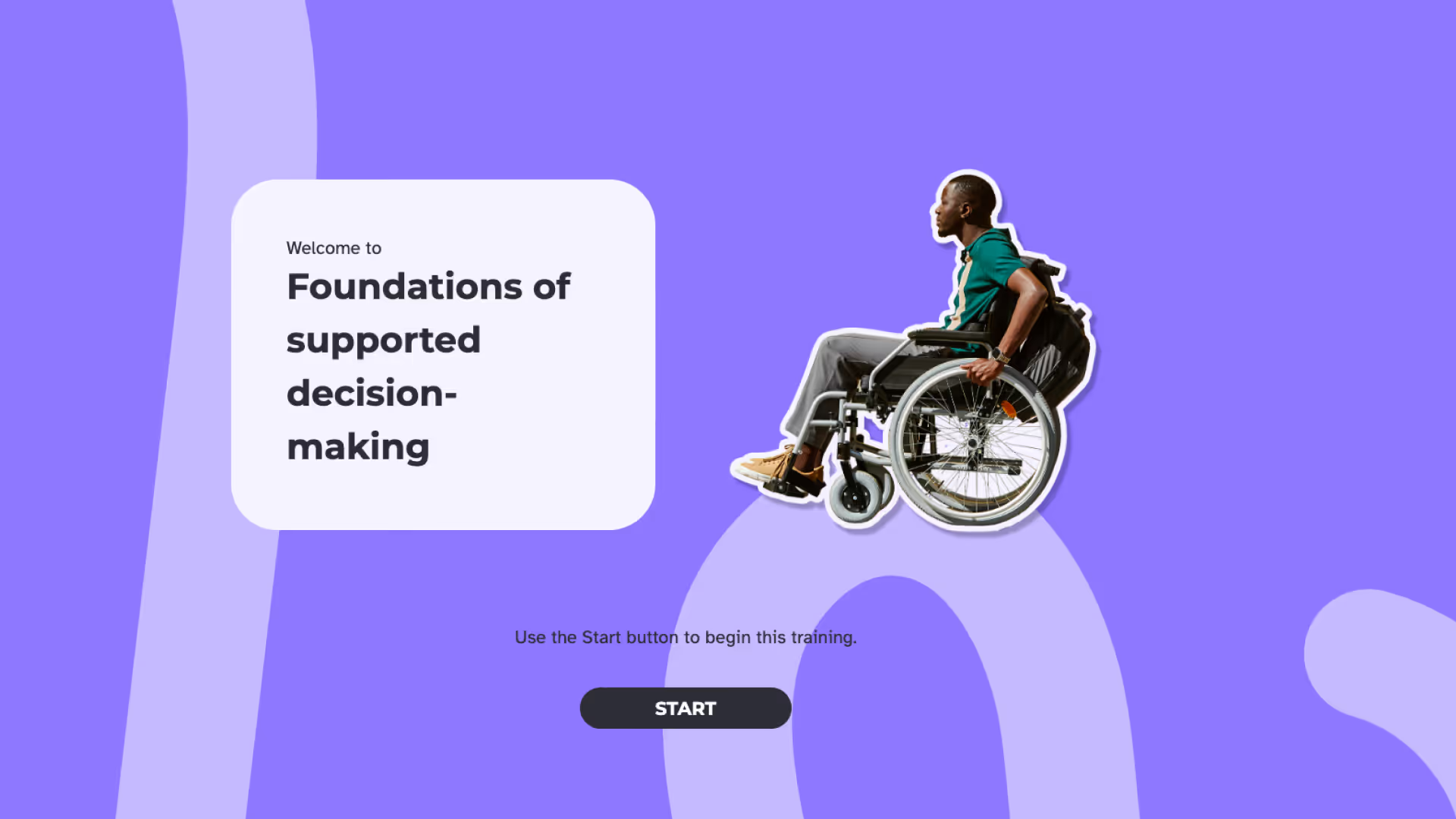
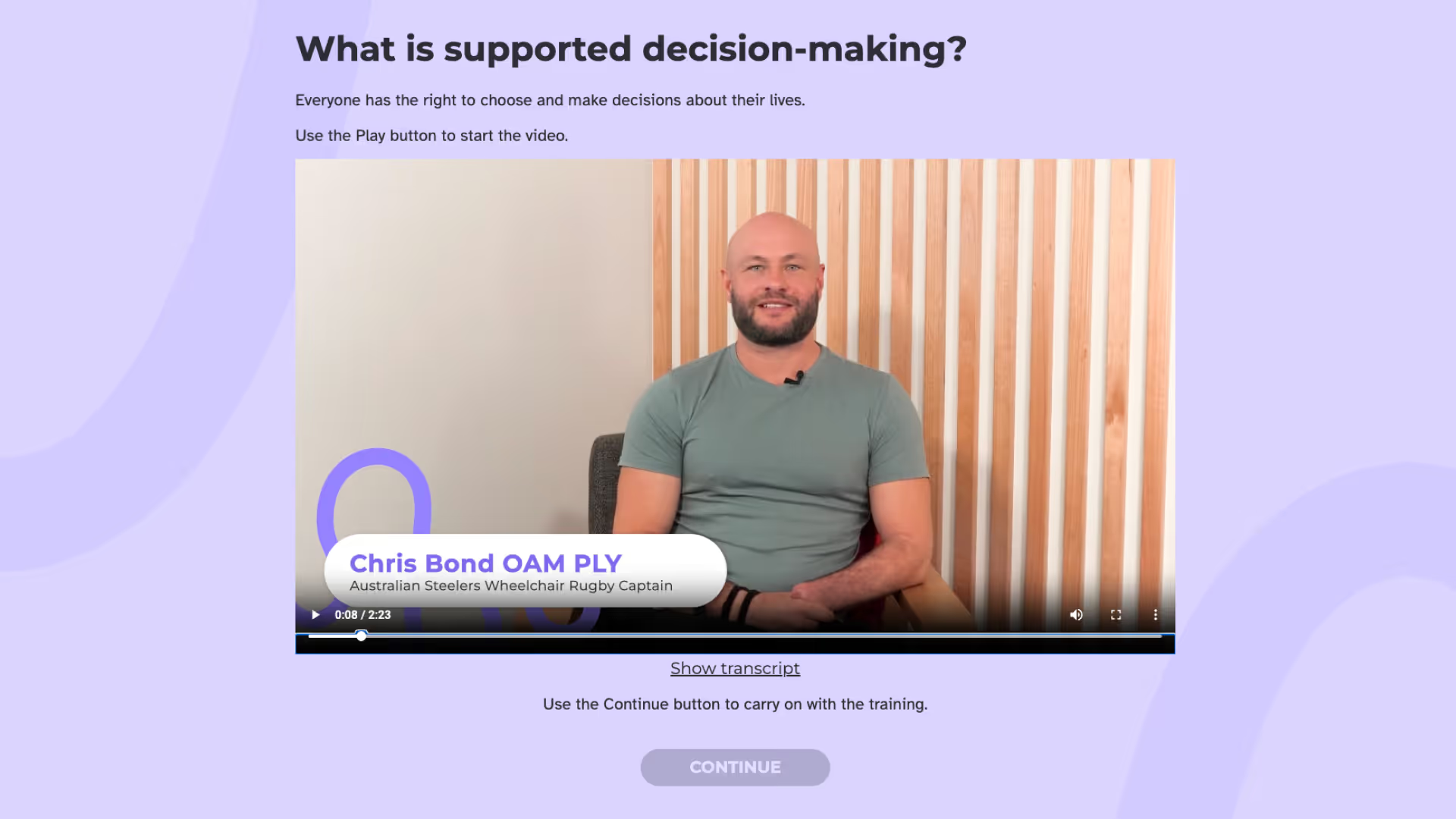
Everyone has the right to make decisions about their own life. This online course shows disability support workers how to uphold that right in everyday practice, from small daily choices to big life decisions.
The training runs across two modules covering the foundations of supported decision-making and how to apply the Supported Decision-Making Practice Framework in real situations. Learners use scenarios to practise gathering information, weighing options, documenting decisions, and handling challenges like family disagreement.
What you'll learn
By the end of this course you will be able to:
- Explain why people have the right to make their own decisions
- Distinguish independent, supported, and substituted decision-making
- Recognise the role of guardians in the decision-making process
- Balance dignity of risk with duty of care
- Apply the Supported Decision-Making Practice Framework step by step
- Work with a person rather than for them
- Document decisions and the support provided
- Respond to family or supporter conflict during decision-making
Top Courses
in this Library
More information below.

Course structure
The course runs across two modules.
Module 1: Foundations of Supported Decision-Making: Why people have the right to decide, the difference between independent, supported, and substituted decision-making, the role of guardians, and how to balance dignity of risk with duty of care.
Module 2: Applying Supported Decision-Making: The Supported Decision-Making Practice Framework and a step-by-step process for guiding real decisions. Scenarios cover gathering information, weighing options, documenting decisions, and handling challenges like family disagreement.
More information about this course
- Rights in supported decision-making
- Types of decision-making
- Working TO rather than FOR the person
- The Supported Decision-Making Practice Framework
- Family and supporter conflict
- Recording decisions and the support provided
NDIS Practice Standards
Core Modules:
- 1. Rights and Responsibilities
- 3. Provision of Supports
Quality Indicators:
- 1.2 Individual values and beliefs
- 1.4 Independence and informed choice
- 3.2 Support planning
- 3.4 Responsive support provision
NDIS Workforce Capability Framework
Workforce Objectives:
- Our Relationship
- Your Impact
- Support Me
Core Capabilities:
- 1.1 Uphold my rights
- 1.2 Communicate and assist effectively
- 1.3 Build trusted relationships
- 1.4 Work collaboratively
- 2.1 Show self-awareness
- 2.2 Work within your capabilities
- 3.1 Understand what a good life means to me
- 3.2 Support me to make my own decisions
- 3.3 Build my capacity to participate
- Disability support workers
- Service providers
- Carers and family carers working with NDIS participants
- New staff completing onboarding
- Existing staff needing a supported decision-making refresher
- Format: Online eLearning, self-paced
- Devices: Desktop, tablet, and mobile
- Assessment: Knowledge check
- Certificate: Issued on successful completion
How long is the supported decision-making course? Around 75 minutes across two modules, fully self-paced.
Do I get a certificate? Yes. A certificate of completion is issued at the end.
What is the difference between supported and substituted decision-making? Supported decision-making means helping a person make their own decision. Substituted decision-making means a decision is made on their behalf, usually by a guardian. The course covers when each applies.
Is this course suitable for NDIS workers? Yes. It is built specifically for disability support workers, NDIS service providers, and carers, and aligns to the NDIS Practice Standards.
Can I complete the course on my phone? Yes. The course works on desktop, tablet, and mobile.
Snapshot

Other courses that might interest you



.avif)

.avif)
.avif)


.avif)
.avif)


.avif)










.avif)
.avif)
.avif)
.avif)

.avif)
.avif)




Start building your community with etrainu
